Architecture
My architectural work focuses on lightweight structures, modular systems, and climate-responsive design. Through kiosks, pavilions, canopies, and perforated surfaces, I investigate how minimal structures can define space, filter light, and mediate between climate and use. The focus is on geometry, rhythm, and material behavior—using modular elements to create architecture that is precise, adaptable, and quietly expressive.

Programs Used: Rhino, Enscape, AutoCAD, Grasshopper, Adobe Photoshop, Adobe Illustrator, Adobe InDesign, Revit, SketchUp

Click on
any image
for a better view
Project
Content
Beach Canopy
01
Kiosk Cafe
02
Urban Modules
Perforated Surfaces
04
03
Campus Pavilion
05
Beach Kiosk
06
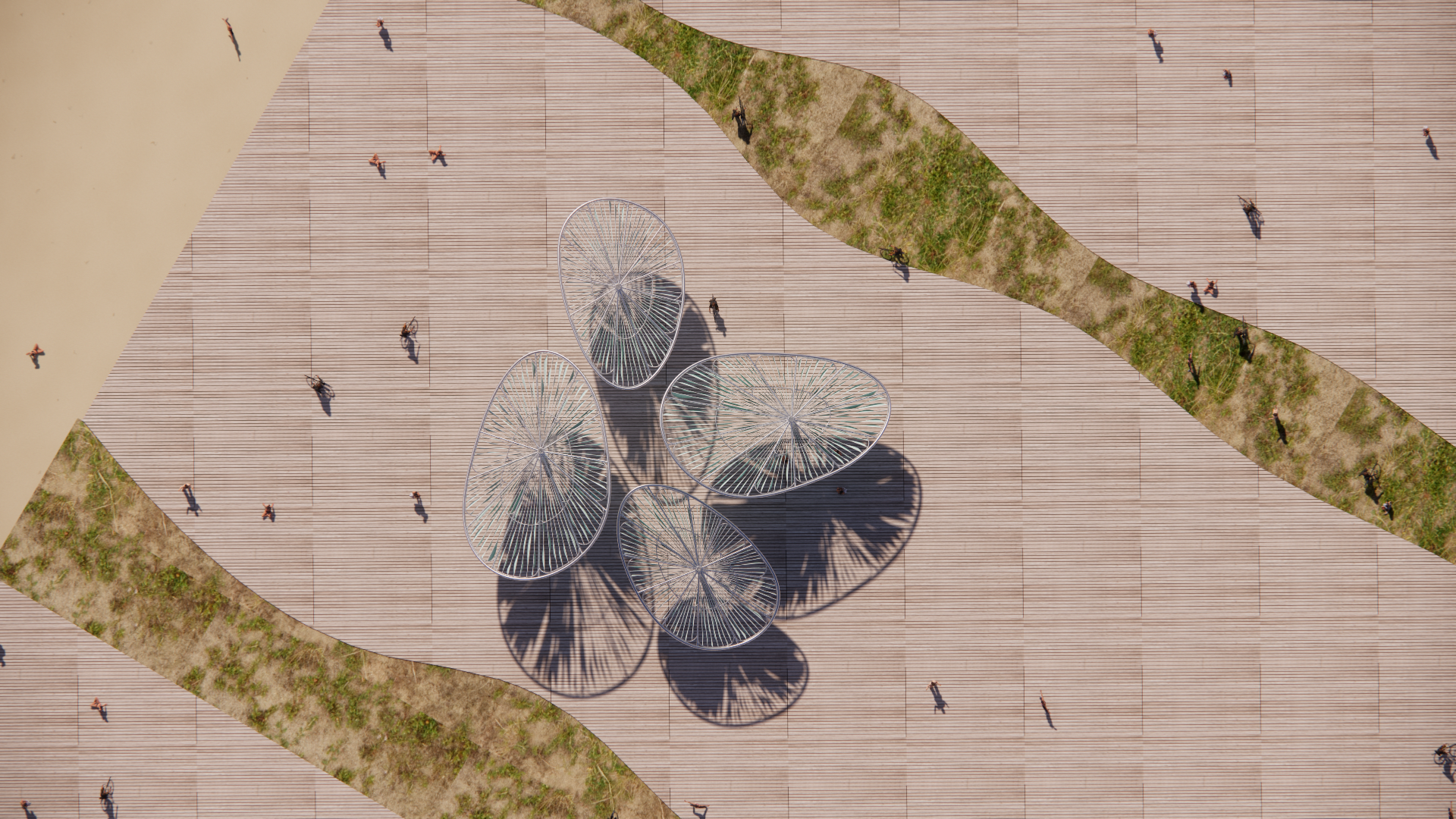
A canopy installation designed as a series of four steel-framed structures that provide shade and visual rhythm along the beachfront. Each canopy integrates tensioned fabric panels that hang softly from the frame, illuminated by concealed lighting within the structural pipes.
Beach Canopy

The design combines lightness and durability, creating an inviting public space that shifts character from day to night through its dynamic play of form, shadow, and light.


Kiosk Cafe
An academic design proposal for a seasonal café at the University of Toronto’s St. George Campus. Drawing from European kiosk typologies, the project envisions a compact, two-level structure that fosters social interaction and reinstates the café culture as a spatial and communal experience within the campus context.


Urban Modules
A modular typology study exploring the combination of varied unit sizes and forms to generate adaptable spatial configurations.


Through modular aggregation, the system creates interconnected environments that function as urban social hubs: spaces for retail, dining, and interaction. Material selections enhance visual rhythm, flexibility, and identity across different module compositions.

Perforated Surfaces
Perforated Surfaces
This section explores how computational design tools can inform both the aesthetic and environmental performance of architectural surfaces. Through parametric modeling in Grasshopper, the studies investigate how patterns of perforation can shape light, texture, and spatial experience.

The first project develops a ceiling baffle system for an airport, where varying perforation parameters modulate natural light to create a dynamic interplay of illumination and structure.


The second project applies image-based data to an office façade, translating tonal gradients into perforation density to achieve a responsive, climate-conscious envelope that merges precision with visual subtlety


A semester-long architectural project developed for the University of Toronto’s St. George Campus. The pavilion is conceived as a composition of stacked slabs with carved voids, generating fluid spatial connections that encourage interaction, rest, and collaborative study among students from diverse cultural backgrounds.
Campus Pavilion


Beach Kiosk
Designed as compact seaside cafés, these kiosks create inviting social spaces within a minimal footprint. The curved form and perforated exterior surfaces soften the architectural expression, filtering sunlight while blending seamlessly with the coastal landscape.

Two design variations explore materiality and façade rhythm, emphasizing lightness, openness, and comfort in a beachfront setting.

